In May 2026, Interim Executive Director Jennifer Coco testified before the Senate HELP Committee during the full committee hearing, “Meeting the Individual Needs of All Students: The Role of Charter Schools.”
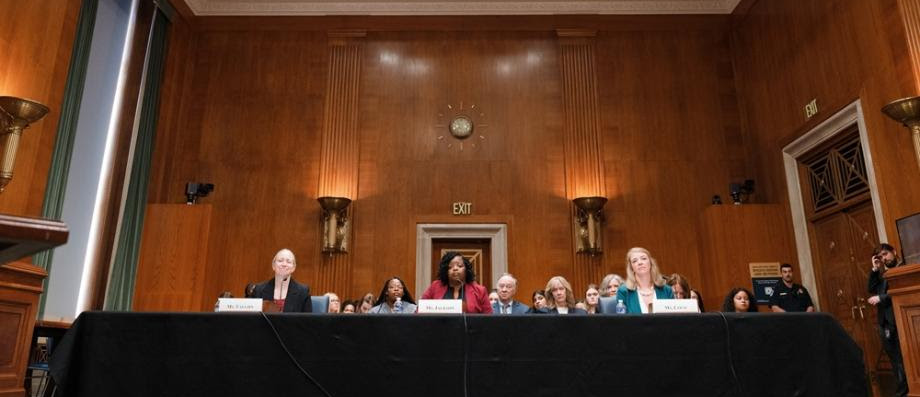
“It’s the duty and responsibility of policymakers — from Congress to state legislators — to ensure that parents can navigate a marketplace of school choices in which students’ rights are protected. This is a meaningful choice.” — Jennifer Coco
Jen’s testimony elevated the Center for Learner Equity’s core belief: the vast majority of students with disabilities can achieve at grade level and forge a path to post-secondary education, employment, and independence when they receive the individualized instruction and support they need. She made a clear case for supporting students with disabilities, public schools, and federal education programs and funding, and what Congress must do to make it possible.
Here’s what she told the Committee and why it matters to the work we do every day.
The Students
The scale is significant. As of the 2024–25 school year, 8.2 million children — about 1 in 7 public school students — are eligible for special education services under the Individuals with Disabilities Education Act (IDEA). Add the 1.6 million students supported under Section 504, and that’s more than 10 million children in our public schools who have individualized learning needs.
Every student with disabilities deserves access to an excellent school. And many are choosing charter schools, with roughly 400,000 children with disabilities currently attending them. However, children with disabilities enroll at lower rates in charter schools compared to traditional public schools (11.8% vs. 15%). This enrollment gap has persisted since we began analyzing enrollment trends more than a decade ago.
Enrollment by Primary Disability (2021)
Chart: Center for Learner Equity, Civil Rights Data Collection (CRDC) 2020-2021 Analysis: Characteristics of Students with Disabilities Enrolled in Charter Schools (October, 2024) https://www.centerforlearnerequity.org/wp-content/uploads/CLE-crdc2024_brief2_characteristics.pdf
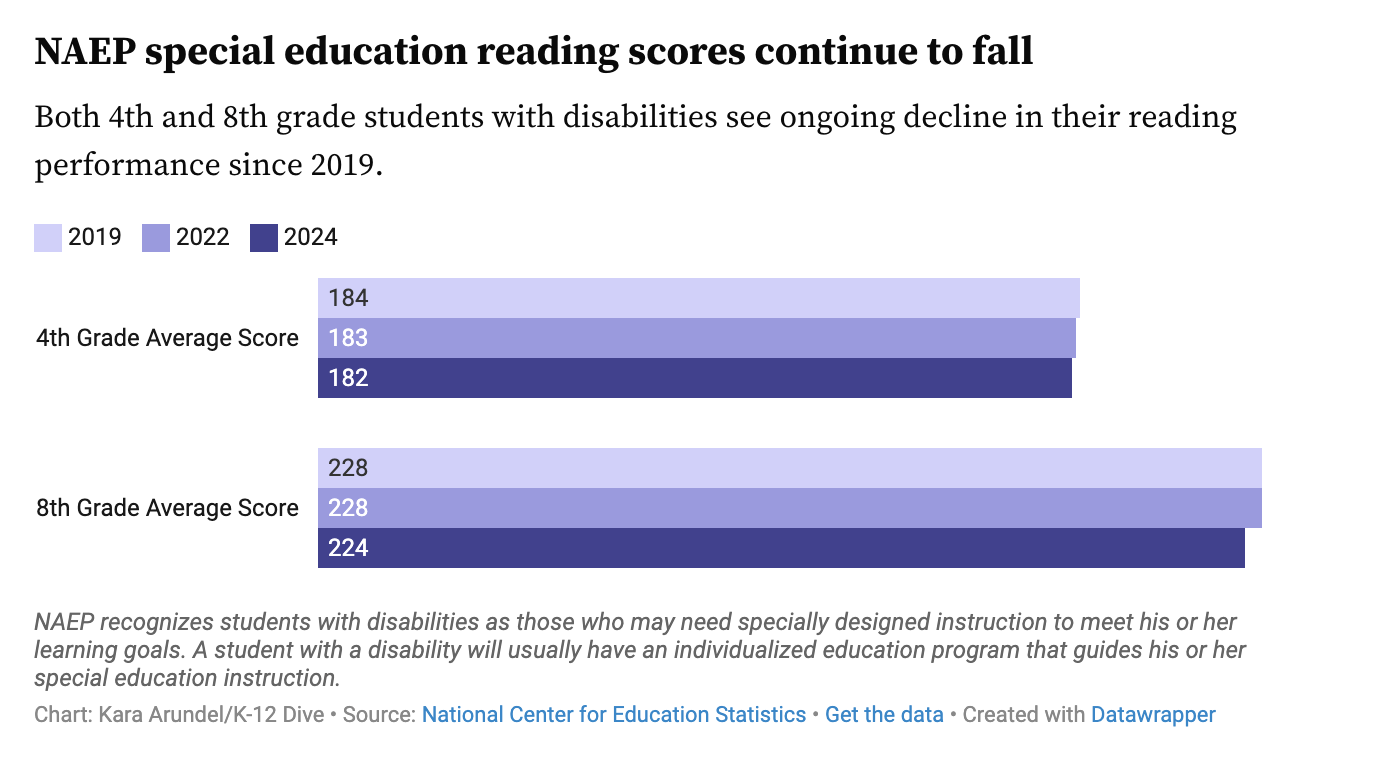
What’s more, only 20% of students with disabilities score at proficient levels on state assessments.
NAEP Reading Scores (2024)
What Gets in the Way
At the Center for Learner Equity (CLE), we challenge an unproductive narrative that charter schools either want to serve students with disabilities or they don’t. That framing does a disservice to a complex issue.
As a matter of policy and practice, we have not consistently ensured that all charter schools can access the services and supports students with disabilities need to succeed. It’s why CLE partners with state and local policymakers, school systems, charter school authorizers, charter management organizations, funders, and advocates in the civil rights, special education, and charter school communities to co-create solutions to these challenges.
The extent to which charter schools are prepared and equipped to meet the needs of students with disabilities is affected by challenges in three areas outlined below.
- Capacity. Charter schools, particularly those operating as their own Local Education Agency, can lack the economies of scale needed to deliver the full continuum of special education services. Our work in New Orleans, supporting the school board and autonomous charter schools in coordinating shared special education services, is an example of the type of infrastructure-building that directly helps address this challenge.
- Access. Charter schools can struggle to access the staffing pipelines and related service providers that traditional districts can call upon. Our collaboration with the New Jersey Public Charter School Association to produce an action guide for special educator retention demonstrates how the charter community can prioritize solutions.
- Funding. Charter schools receive, on average, 75% of the per-pupil funding that traditional public schools receive. Our work with the Connecticut charter community demonstrates the type of advocacy necessary to address funding disparities.
Actionable Solutions
Our testimony laid out four concrete asks for Congress:
- Direct energy and resources toward advancing charter school quality in equal measure to growth. While funding the Charter School Program is essential, so is protecting investments in all K-12 Title and IDEA programs.
- Balance autonomy with intentional capacity building. We must require evidence of charter communities’ proactive planning and coordination to improve their readiness to educate students with disabilities.
- Fully fund IDEA. Congress only contributes 10% of what was originally promised to states. For charter schools, IDEA funding is foundational.
- Protect the federal infrastructure that supports IDEA implementation and the Charter School Program. States need an intact Department of Education that can provide technical assistance, oversight, and stability.
Why This Moment Matters
Dismantling the Department of Education will both harm charter schools and obstruct students with disabilities’ access to schools offering inclusive learning environments and evidence-based education practices.
Students need access to all components of IDEA; families need parent training; educators need teacher preparation programs; and school and state leaders require robust technical assistance and oversight, as Congress directed in IDEA. It is the responsibility of policymakers — from Congress to state legislators — to ensure families can navigate a marketplace of school choices where students’ rights are protected.
This is a meaningful choice.
Read CLE’s full written testimony here | Watch the full hearing here.
Comments are closed.