Inclusion done well requires real investment in training, sustained implementation of new practices and new habits, exposure to effective examples of inclusion, and integration of staff with specialized skills. But GAO’s findings tell us that resources follow belief, not the other way around.
Sep 14
Sep 10
In response to the announced Senate Health, Education, Labor and Pensions (HELP) Committee markup on July 30, 2026, the undersigned organizations issued the following statement.
Aug 11

CLE, in partnership with the New Jersey Public Charter Schools Association, released a one-of-a-kind guide to support and retain special education teachers, titled “Why Special Educators Leave and How Leaders Can Keep Them: A Guide for Principals and System Leaders.” The toolkit includes tangible recommendations, ready-to-use tools, and role-specific checklists designed for quick adoption.
Jul 28
In response to the announced Senate Health, Education, Labor and Pensions (HELP) Committee markup on July 30, 2026, the undersigned organizations issued the following statement.
Jun 30
The Supreme Court’s longstanding Olmstead ruling states that institutionalizing people with disabilities, instead of providing supports to live in their communities, is unlawful discrimination and segregation. Yet, the administration issued an alarming memo that disavows this central premise of the Olmstead guarantee to millions of people with disabilities. It’s why CLE joined our colleagues at the Council of Parent Attorneys and Advocates (COPAA), the Council for Exceptional Children (CEC), and the National Center for Learning Disabilities (NCLD) in condemning the Department of Justice’s recent actions. Read our joint statement here →
Jun 17
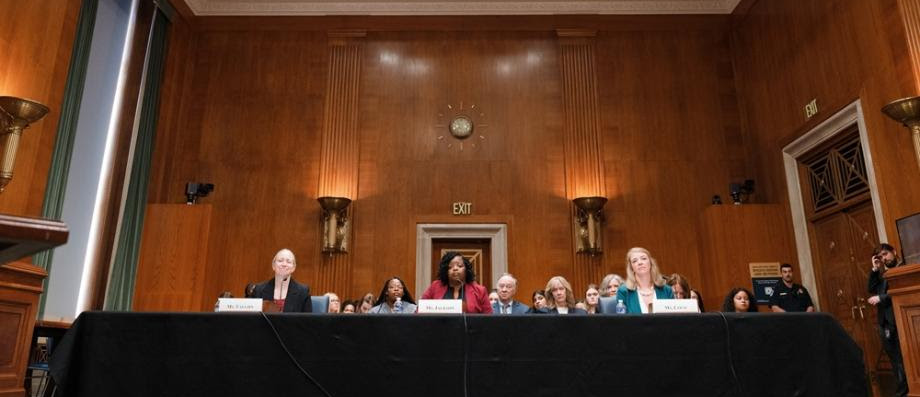
CLE’s Interim Executive Director Jennifer Coco testified before the U.S. Senate Committee on Health, Education, Labor and Pensions on “Meeting the Individual Needs of All Students: The Role of Charter Schools.” The testimony elevated our core belief: the vast majority of students with disabilities can achieve at grade level — and forge a path to post-secondary education, employment, and independence — when they get the individualized support they need.
Jun 16
The Center for Learner Equity (CLE) continues to strongly condemn moving the functions of the Department of Education (ED) to other federal departments. The Office of Special Education and Rehabilitative Services (OSERS) leads federal support, oversight, assistance, and funding for all aspects of educating students with disabilities — ensuring the federal government turns the promise of the Individuals with Disabilities Education Act (IDEA) into reality.
May 13
The White House’s proposed FY2027 budget would cut billions from federal education programs that students and public charter schools rely on every day. Congress must protect and strengthen education funding for students with disabilities — not scale it back. That’s why the Center for Learner Equity is urging lawmakers to prioritize students with disabilities and the school teams who support them in the 2027 budget process. Read our full letter to the House and Senate Appropriations Subcommittee on Labor, HHS, Education, and Related Agencies here: CLE FY27 Labor-H final
Apr 21
Improving outcomes for students with disabilities requires more than good intentions; it requires disciplined inquiry, shared learning, and systems that are built to last. That’s the vision behind the Center for Learner Equity’s NICE Network and its Community of Practice: bringing together regional organizations to study their impact, strengthen their practice, and contribute learning to the broader field. This month, we’re proud to celebrate the completion of the first-ever NICE Community of Practice. Over the past year, three partner organizations engaged in deep case study work, capacity-building, and collaborative learning—all focused on strengthening their leadership guiding schools towards inclusive systems that produce improved outcomes for students with disabilities. To mark this milestone, we asked our three Cohort 1 leaders to reflect on their growth: When you think back to where your organization was a year ago, what is one capability you have now that you did not have then, as a result of the NICE Community of Practice? 🎥 Brooke Allen, Executive Director Diverse Learners Cooperative 🎥 Julie Camerata, Executive Director DC Special Education Cooperative 🎥 Shannon Garfield, CEO Special Education Leader Fellowship These reflections underscore what’s possible when organizations take the time to rigorously study their […]
Feb 18
Four organizations selected to deepen research and practice and strengthen outcomes for students with disabilities New York City, NY – The Center for Learner Equity (CLE) announced today the four organizations selected for Cohort 2 of its NICE Community of Practice (CoP). The initiative is designed to build the capacity of regional special education support organizations to strengthen inclusive systems and accelerate outcomes for students with disabilities through research, shared learning, and leadership development. CLE’s Network of Infrastructure & Collaborative Entities (NICE Network) and its Community of Practice model support member organizations in examining and strengthening the systems that drive impact for students with disabilities in charter and traditional district schools. Cohort 2 focuses on Research & Practice, equipping grantees to conduct structured needs assessments, build capacity, and develop case studies aligned with NICE’s mission to transform outcomes for students with disabilities. “Improving outcomes for students with disabilities requires more than isolated programs—it requires disciplined inquiry into what works, why it works, and how it can be strengthened,” said Gretchen Stewart, CLE’s Senior Director of Educational Leadership. “Cohort 2 brings together organizations committed not only to serving all schools and students, but to studying their own impact and contributing shared […]